


How to Inspect Classic Nova Panels for Cold Weather Damage
Posted on: November 19, 2026 in Restoration Guides
Cold weather can push classic cars like the Nova to their limits, especially when it comes to aging body panels. As temperatures drop and moisture sets in, imperfections you did not notice over summer can suddenly become problems. If we do not get ahead of those small faults before winter tightens its grip, rust and misalignment might sneak in. That is why taking the time to inspect Nova body panels now, right before cold hits full force, can make all the difference.
Panels that looked fine last month might not be holding up as well as they should. The trick is knowing where to look and what signs should not be ignored. From bent seams and bubbling paint to hidden rust underneath, inspecting your Nova early can save time, money, and stress later.
Why Cold Weather Impacts Classic Nova Body Panels
Classic panels were not made to handle the same moisture barriers or road treatments we see today. As temperatures swing during late fall and into early winter, metal expands and contracts in ways that stress the seams, seals, and fasteners holding everything together.
Once those seals start giving out, cold air, slushy road grime, and rain can get in, creating ideal spots for corrosion. If salty water sits in those areas, damage gets even worse. It is not always easy to spot from above. Here is where we often notice early signs of wear:
- Just behind the wheel wells where debris collects
- Along the lower edges of the quarter panels
- Inside body seams along the rocker panels
These places catch all the splashback from driving and tend to stay wet longer than the rest of the car. The result is hidden rust that builds slowly each winter, especially if the panels already have scratches or thin spots.
What to Look for on the Surface of Your Nova Panels
Once the car is clean and dry, take a walk around to inspect each exterior panel. Look from different angles to see how light hits the paint. This helps you catch things like small bubbles, flaking, or spots where the gloss looks uneven. All of those can suggest rust just beneath the surface.
Be extra mindful of flat, horizontal sections. These collect more moisture than vertical ones. Pay close attention to:
- Hood edges where water can sit and work under the paint
- Trunk seams, which are often overlooked during regular washes
- Weld joints by the rear quarter panels or below the door edges
Even small disruptions in the finish might hint at something more serious hiding below. If paint is already lifting at these seams, there is a chance water has already gotten inside.
Checking Panel Fit and Alignment Before Winter Storage
When a panel starts to shift out of place, it is usually because something underneath has moved or worn out. You might notice that a door does not line up like it used to, or one fender sits just a little higher than the other. These are not just cosmetic problems. Misalignment can leave gaps that let in cold air and moisture, or even start rattles that wear down more connections over the season.
Even factory-style Nova body panels can drift after years of roads and temperature changes. It only takes a small shift to let wind intrude or cause water to seep into the cabin or trunk. Take time to look for:
- Uneven spacing between panels
- Doors that resist closing or pop open slightly
- Gaps at the bottom of bodylines that were not there before
If anything looks or feels off, it is worth closer inspection before the weather gets colder and detaching components becomes harder to do safely.
Underside Rust and Drainage Trouble Spots to Inspect
The underside of any classic car is where things hide the longest. It is also where damage from winter tends to set in first. Rust spreads in dark, damp areas, especially when drainage is not working right. If water or road salt splashes up and then sits without draining, it starts eating away at your panels from the inside.
Key spots to check include:
- Inside rear wheel arches where slush gathers and can cling to the metal
- Beneath the rockers, especially at seam joints or welded patch areas
- Around factory or aftermarket undercoating that may have cracked and lifted
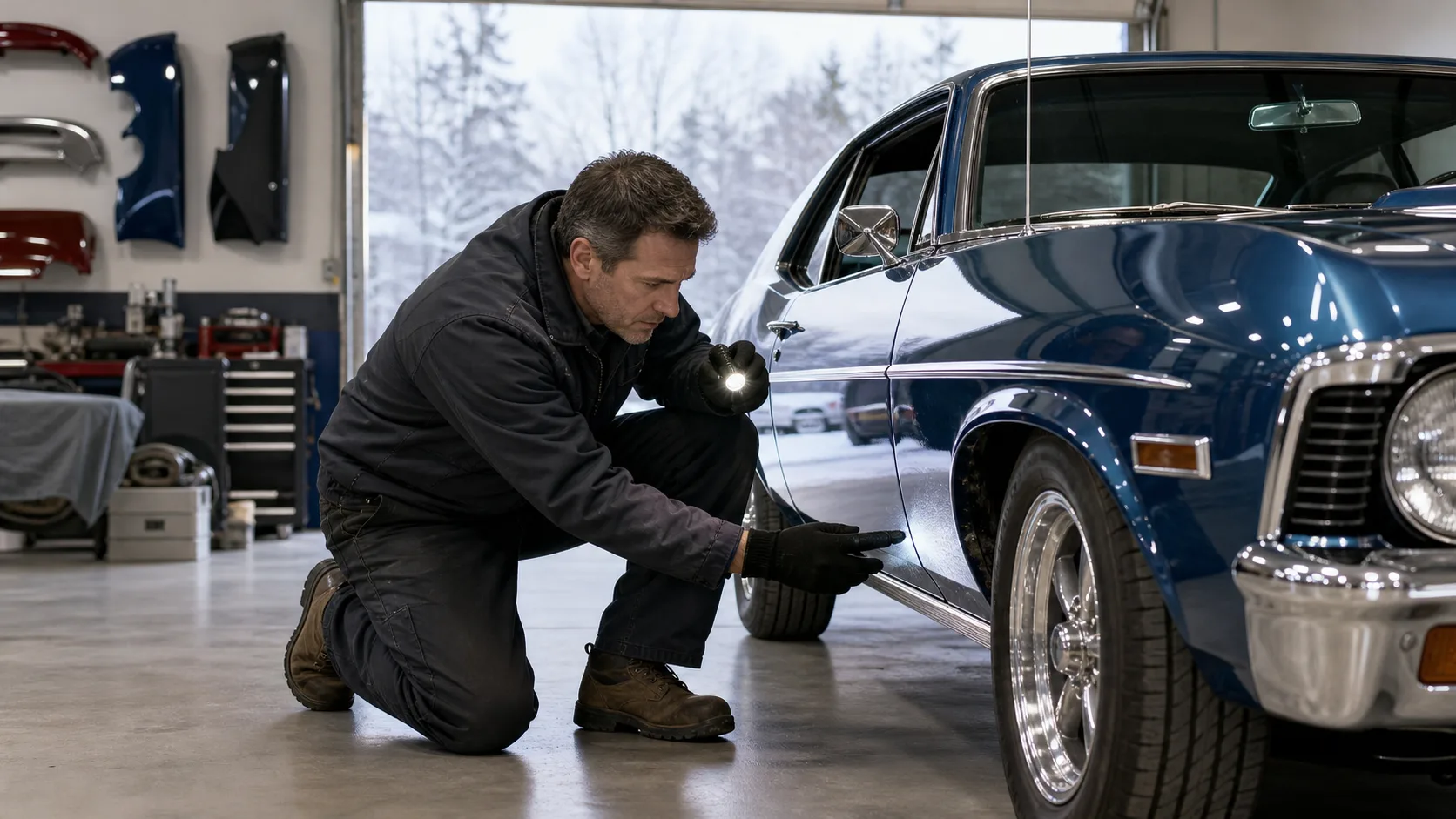
Take a flashlight under the car and look carefully at each area that would face the road or collect runoff. Make sure the small drainage holes in corners of panels are not clogged with debris. If these stay blocked over winter, trapped water can freeze and push metal apart or cause paint to peel.
When to Be Concerned and Call a Pro for Help
Some wear can wait. Other damage should be handled before the season advances any further. If you notice full separation at panel seams or catch a soft spot when pressing around the wheel arches, it is time to bring in experienced help.
Surface rust and small bubbles are one thing. Once the metal starts lifting or doors no longer close tight against their seals, repairs might need more than a simple touch-up. DIY jobs can cover deeper trouble, not solve it. That is especially true if fresh paint is applied over rust that has not been properly treated.
If the panels are aftermarket or have been replaced before, it helps to work with someone familiar with their fit and quality, such as Dynacorn reproductions. These details matter when matching structure and finish.
Make Sure Your Nova Stays Solid Through the Cold
Restoring and keeping a classic in shape calls for paying attention all year, but the weeks right before deep winter play a big role. Cold weather will not stop damage. It only hides it for a while. That is what makes a careful inspection right now so important.
Even cars that were stored during rainy months might still show signs of wear. Regular checks help keep Nova body panels strong, fitted, and sharp enough to handle whatever the season brings. When spring arrives, you will be glad the work was done before the ice set in.
Spotting surface rust, panel misalignment, or signs of moisture during your walkaround inspection means it is smart to act before colder weather makes things worse. Keeping body lines straight and rust-free through winter takes more than a quick wipe-down. Having the right parts in place is key. We offer solid aftermarket options, including Nova body panels, with the high-quality fit and finish your classic deserves. At Classic Body Parts, we know how to keep classics like the Nova looking clean and holding strong, so give us a call today to make sure your restoration stands up this season and beyond.
Related Articles
Understanding When to Replace Tricky Mustang Side Panels
Mustang side panels seem to take on more wear than most other exterior parts, especially as the seasons shift and moisture starts creeping into seams. Cold t…
Steps to Use Dynacorn Sheet Metal for Mustang Fastback Builds
Restoring a Fastback Mustang is more than a repair project. It’s how a lot of car owners connect back to a vehicle that shaped muscle car history. But not ev…
Why Improper Panel Ordering Hurts Classic Car Restoration
Matching Camaro body panels by year isn’t always as simple as it sounds. From the outside, many model years may look similar, but small shifts in body lines,…