


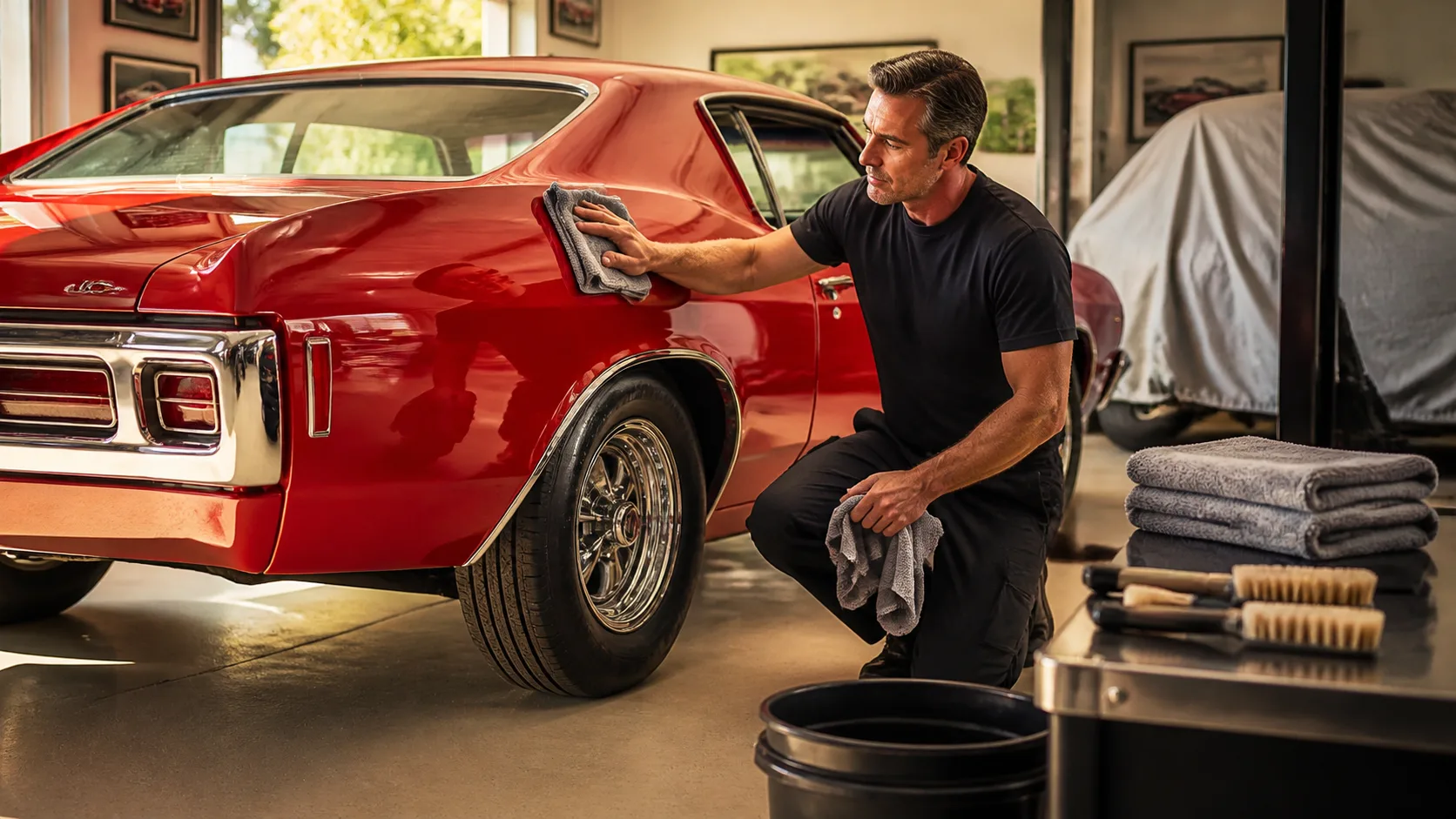
Tips for Cleaning Your Chevelle’s Exterior Panels Before Storage
Posted on: October 29, 2026 in Restoration Guides
Late fall is a smart time to start prepping your Chevelle for winter. The temperature drops, the days get shorter, and if your car is sitting for a few months, it’s better to put it away clean. Leaving the job half done usually leads to surface issues when spring rolls around, everything from light scratches to dull panels to hidden rust in the seams.
We’ve seen what happens to Chevelle body panels that get overlooked before storage. Dust settles in small valleys, grime settles around the edges, and moisture finds its way into places it doesn’t belong. Dirty panels under a car cover make things worse without you realizing it. But a clean prep now doesn’t just keep the car looking good, it helps stop longer-term wear before it starts.
Remove Loose Debris Before Washing
Before taking out the hose or soap, there’s one step that can save you time and paint damage: removing loose stuff the gentle way. When panels go straight from dusty to wet, you’re giving every bit of grit more power to scratch.
Use soft brushes or microfiber towels to knock off that upper layer of dust, especially if the car has been sitting outside. We’re not talking about scrubbing here, just lifting dirt that would come off with a flick or wipe. Around trim edges and badges, take an extra minute. These spots trap fine dirt and hold moisture more than you’d think.
Here’s what helps before washing starts:
- Soft microfiber cloths used dry to sweep surface dust
- A gentle detail brush for seams, vents, and panel edges
- Light passes across glass and chrome that border the panels
By getting rid of loose buildup first, you’re giving the rest of your wash a cleaner path, with less risk of grinding dirt deeper into the surface.
Wash the Panels with the Right Cleaners
Once the surface looks clear, now it’s time to go over your exterior with water and proper soap. This part might feel obvious, but using the right cleaner makes a difference. Regular dish soap or household cleaners break down wax protection and strip finishes. Car-safe soap is made to be easy on paint and reliable for body panels.
Use cool or slightly warm water when rinsing and always clean from top to bottom. Gravity works in your favor here. Clean areas higher up the body carry less road grime, so detergent doesn’t get dragged back into the lower sections once they’re clean.
A few cleaner-friendly habits can help things go smoother:
- Stick with dedicated car wash solutions, not general-purpose soaps
- Use two buckets if possible, one for clean soapy water, one for rinsing
- Use a clean wash mitt or towel, and rinse it often as you go
Don’t forget to pay attention to the edges of fenders, quarter panels, and rockers. Dirt sneaks into these spaces, especially near tires. Take your time there to make sure soap or grime isn’t left hiding in creases.
Dry and Inspect Panel Surfaces
Once the car has been rinsed off, drying needs to happen right away. Leaving water to evaporate brings back all the dust you just cleaned, but in the form of spots and streaks. Plus, water that sits around trim or inside seams can linger just long enough to start corrosion underneath.
Use fresh and soft microfiber towels to dry each body panel. Patting works better than dragging. A leaf blower works too, if you have access to one, but blowing water away doesn’t give you the same chance to stop and look closely.
Drying is also a good time to spot small issues hiding under the surface:
- Paint chips or scratches that happened during the year but went unnoticed
- Rust specs starting near panel seams or around trim pieces
- Moisture pooling under the lips of fenders or inside door jambs
By slowing down here, you’re not just drying the car, you’re taking stock of where your Chevelle stands before winter.
Prep Panels with a Protective Barrier
Even if panels look clean and dry, they’re still open to risk during winter storage. Cold air, garage dust, and changes in humidity all work on the body from the outside in. A little surface protection goes a long way in holding back damage while the car sits.
There are a few easy ways to get coverage on freshly washed panels. A light coat of spray wax can make a big difference. If you’ve got the time, going over the whole car with a hand-applied wax gives stronger protection. Just avoid thick wax build-up in seams or around emblems, that traps dirt if it’s left too long.
Here’s what we suggest for barrier protection during winter months:
- Use quick-detail sprays to close out a wash if time is short
- Apply a quality car wax to Chevelle body panels with a foam or microfiber applicator
- If covering the car, use a breathable car cover that doesn’t hold trapped moisture
You want the car protected without sealing in anything unwanted underneath. Skipping this layer or using the wrong kind of cover can do more harm than good.
Keep Moisture and Dust Away During Storage
Once the car is clean and protected, your storage setup matters just as much. A garage or shelter helps, but what’s around your Chevelle still impacts how the body holds up over the colder months. Small gaps in car covers or garage doors let in more dust than you’d think.
Inspect storage areas for wind drafts, water drips, or anything that might move dust or moisture over the body in the months ahead. Where possible, try to give a few feet of extra space around the car. That lowers the chance of neighbors or garage debris brushing against your panels.
To help body panels stay clear through the winter:
- Store in a dry, well-ventilated garage or space when possible
- Pick a breathable car cover to avoid moisture trap
- Check around the car every few weeks, especially around wheel arches and rocker panels
Keeping the car stored doesn’t mean ignoring it. A quick check every now and then can catch early issues before they sit too long.
Keep Your Chevelle Clean and Covered All Winter
Getting your Chevelle ready in the fall makes the spring return feel that much better. Clean body panels reflect light better, block surface damage longer, and save you from doing the whole job over when the air warms up again.
Taking these prep steps now gives your panels a fighting chance all season. It slows down aging, helps prevent rust buildup, and keeps problem areas from spreading. Whether you plan to start a new project in the spring or just hit the road again, body prep is something that pays off every time. Made the right way, these panels are meant to last. A little care now helps make sure they hold their form through anything winter throws at them.
Prepping your vehicle for storage or planning a restoration is easier with our wide range of high-quality options built to meet factory specs. Whether you’re maintaining a daily driver or bringing a long-term project back to life, clean and protected surfaces make all the difference. Our inventory includes everything from fenders and quarter panels to the full exterior shell. To find the right fit for your model, explore our current stock of Chevelle body panels. At Classic Body Parts, we’re here to keep your restoration moving forward, so feel free to contact us with any questions.
Related Articles
Why Improper Panel Ordering Hurts Classic Car Restoration
Matching Camaro body panels by year isn’t always as simple as it sounds. From the outside, many model years may look similar, but small shifts in body lines,…
How to Smooth Out Quarter Panel Welds Before Coating
Smoothing out welds on classic car quarter panels can be one of the most satisfying steps in restoration. When this part of the body looks clean and blends n…
Guide to Checking Door Panel Hardware on Classic Muscle Cars
Classic muscle cars deliver power, sound, and character. But behind the big engines and polished paint, it’s the small things like hardware that keep everyth…