


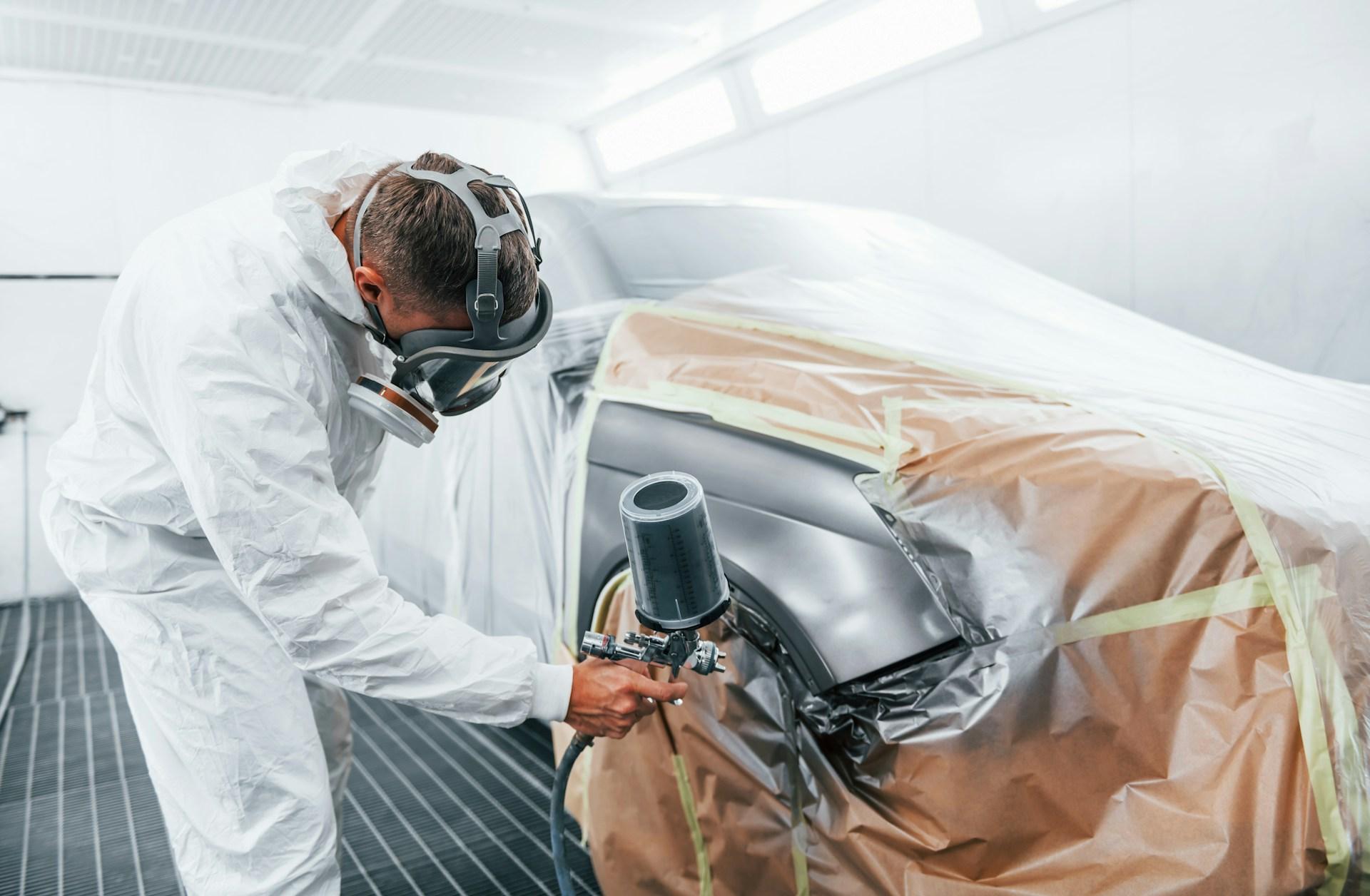
How to Avoid Sheet Metal Warping When Painting in Heat
Posted on: July 5, 2026 in Guides
Summer’s a good season for paint work, but high temperatures can quickly work against us. When we’re dealing with classic sheet metal panels, especially the large ones like hoods, doors, and quarter panels, heat introduces problems most people don’t see until it’s too late. Sun exposure, heat expansion, and poor timing can cause panels to warp or shift just enough to mess up a paint job.
We’ve seen how classic car sheet metal acts under heat during restorations. If the conditions aren’t right, metal can twist, pinch, or ripple between coats. It’s frustrating to see a smooth block job go wavy because something dried too fast or shifted under the gun. So we take steps to understand how heat behaves and what we can do to stay ahead of it.
How Heat Affects Classic Car Panels During Painting
On a hot day, metal naturally expands and softens, even before the first coat of primer hits. That can sneak up if we’re not watching the build-up across the body. With larger panels, like quarter panels or trunk lids, there’s more surface for the heat to spread across. That makes any expansion more noticeable.
This is where problems tend to show up:
- Thin sections in the center of doors or hoods can flex more than the braced edges
- When metal expands, it doesn’t always shrink back the same way
- If dryer heat kicks in unevenly during painting, ripples or waves might form
We look out for what we call “panel breathing.” It’s when warm panels shift slightly between coats or during dry time. Sometimes this movement throws off filler lines or shows hidden high spots.
What to Watch Before You Start Painting
Before paint touches the surface, we make sure everything underneath is ready for it. That includes checking alignment, confirming flat spots are truly flat, and making sure nothing’s been stressed from welding or grinding.
Here’s our regular checklist when prepping panels during summer conditions:
- Feel the surface after blocking to make sure heat hasn’t shrunk or pulled filler
- Clean thoroughly so no residue bakes in or reacts poorly mid-spray
- Tape down edges and seams so they lie flush and won’t lift during painting
- Keep cars or panels out of direct sunlight before starting
We’ve found that bodywork done the day before tends to shift less if it’s left in a climate-controlled spot overnight. That pause before painting gives the material time to settle. It’s worth the wait.
Best Conditions for Painting Classic Car Sheet Metal in Hot Weather
Hot weather on its own isn’t the problem. It’s the lack of control around it that gets us. Dry time speeds up, but that doesn’t always leave room for sanding adjustments or paint leveling. So we look to regulate the area as much as possible before the first coat goes on.
These tricks have helped keep things steady:
- Paint during early mornings or evening when the metal hasn’t been heating for hours
- Work under a roof or at least string up a cloth cover to block direct light
- Use fans or ventilation to push out hot air before it settles and cooks the fumes
- Keep paint and reducer in a cool, dry spot between sessions
Too much humidity slows drying, but too little can cause cracking or texture. When both heat and moisture are in play, paint behaves differently than expected. Any sudden change in weather in the middle of a job forces us to pause and adjust.
Common Mistakes That Lead to Warping
Rushing is the quickest way to let warping happen. We’ve seen how easy it is to go straight to primer after welding, while the surface is still hot. That rush alone can put a slight buckle in soft zones. There are other moves that lead to trouble if we’re not careful.
Some of the biggest mistakes include:
- Painting panels right after grinding or welding without letting them cool fully
- Using filler that softens or expands more under hot temperatures
- Ignoring body gaps that narrow or open as a result of metal heat shifting
When large areas like hoods or roof skins feel cool on the edges but warm in the middle, that’s already uneven expansion. We slow down at those points, feeling for soft zones where paint might lay poorly. If anything feels springy or too hot, it waits.
Why High-Quality Replacement Panels Make a Difference
We get asked sometimes why one panel warps and the next doesn’t, even with the same steps. Most of the time, it comes down to panel quality. Factory-style replacements have better gauge metal and hold their shape longer, especially under heat.
Here’s what we’ve noticed when using better panels:
- Thicker steel has more strength and doesn’t twist with mild heat
- Inner and outer bracing stays squared up, helping the panel keep its original line
- Brands like Dynacorn are made close to original form, with better edge structure for welds
Classic Body Parts carries Dynacorn sheet metal for a range of classic applications, including 1947-53 Chevrolet truck front lower fender panels and 1956 Ford truck cab back panels that are listed in stock with estimated ship times of about two to five business days, so your prep work can start from solid, well-formed metal.
That stronger structure gives paint something better to grip to. And when we’re fitting quarter panels or long doors, that firm base keeps the shape true from side to side. Paint doesn’t have to make up for dips or stretched-out edges.
Leave Heat Worries Behind With Better Painting Prep
Hot summer days will always try to push the paint job around. But when we slow down and let the panel tell us if it’s ready, the whole thing holds together better. Good prep starts long before the gun hooks up to air.
We step back and look at the weather, the surface, and the timing. That way, warped panels and heat shadows don’t become part of the final look. With the right classic car sheet metal and smart planning, we can let the warmth work for us instead of against us.
Starting your summer painting project on a solid foundation is key, so we always recommend choosing panels that keep their shape even in the heat. We’ve seen jobs go wrong from using thin or poorly fitted metal, which is why checking panel quality before priming or sanding is essential. Browse our full selection of classic car sheet metal to find the right fit for your build, and if you need assistance matching parts or prepping for warmer weather, reach out to Classic Body Parts.
Related Articles
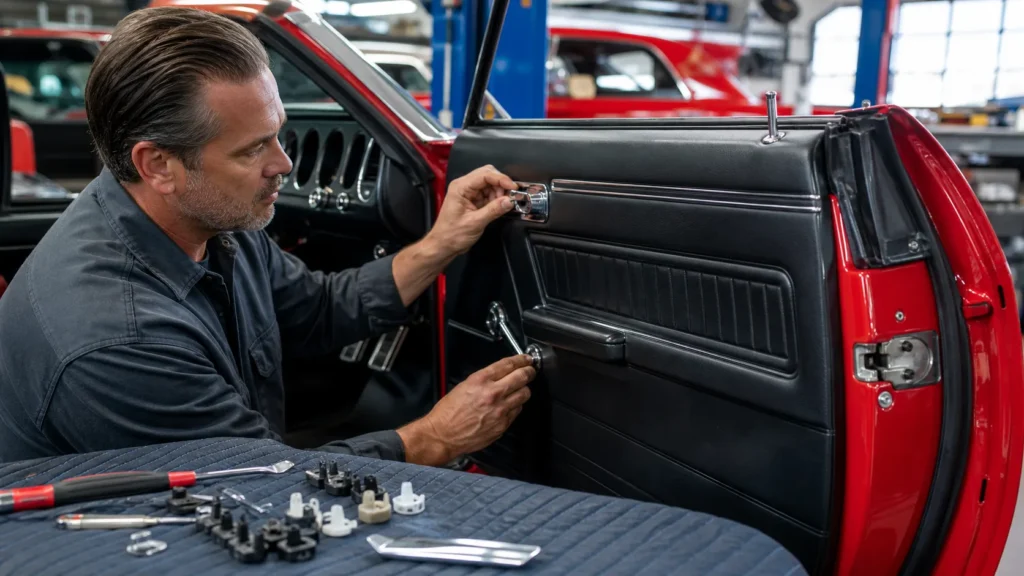
Guide to Checking Door Panel Hardware on Classic Muscle Cars
Classic muscle cars deliver power, sound, and character. But behind the big engines and polished paint, it’s the small things like hardware that keep everyth…
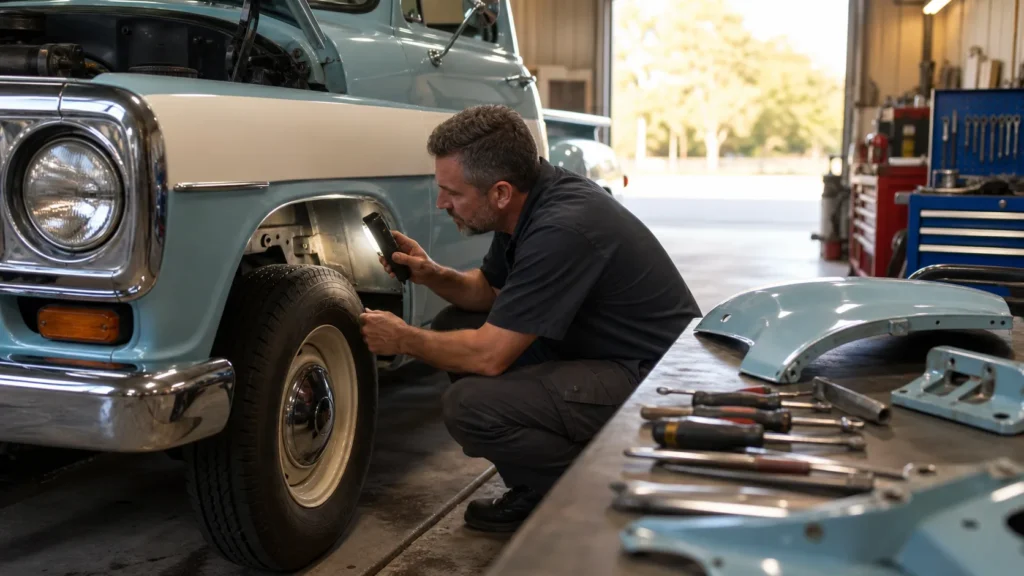
What You Should Inspect in Truck Fenders Before Winter
Truck fenders take on a lot over the year. Rain, mud, road salt, loose gravel, heat cycles: all of it slowly wears them down. But when colder weather starts …
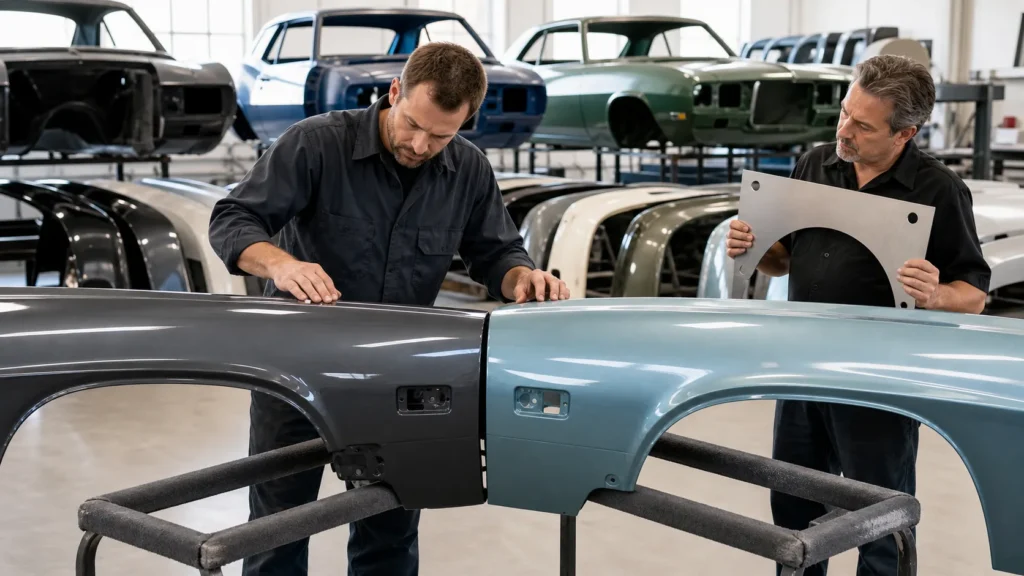
Understanding Camaro Body Panel Years for Accurate Matching
Matching Camaro body panels by year isn’t always as simple as it sounds. From the outside, many model years may look similar, but small shifts in body lines,…