


Understanding Camaro Body Panel Years for Accurate Matching
Posted on: October 1, 2026 in Restoration Guides
Matching Camaro body panels by year isn’t always as simple as it sounds. From the outside, many model years may look similar, but small shifts in body lines, trim slots, or bracket mounts can throw off an entire build if they don’t line up properly. Every generation brought design changes that affect how panels bolt in, how they meet at the seams, and whether they’ll sit straight on the car.
If you’re replacing a hood, working on a rear quarter, or trying to align the front end, knowing how each Camaro year fits, especially during transitions between generations, can save frustration later. Cutting corners on accuracy can lead to misaligned panels and more repair time. That’s why it pays to understand the specific fitment needs before ordering, trimming, or welding anything into place.
Impacts of Model Year Changes on Camaro Body Lines
Each Camaro generation brought new body styles, and within those generations, updates happened almost every year. These weren’t just cosmetic changes. They often affected the exact shape and creasing of body panels, making it hard to take one from one year and drop it onto another car.
For example, when Chevy shifted from the first-gen Camaro (1967, 1968, 1969) to the second-gen (1970, 1971, 1972, 1973, 1974, 1975, 1976, 1977, 1978, 1979, 1980, 1981), it didn’t just redesign from the outside. The fender brackets, hood hinge locations, and even the headlight bezels all changed. That means a second-gen fender won’t fit a first-gen car, even if it looks similar from a distance.
It’s not just big generational shifts that matter. Small year-over-year differences can make an impact too. A crease line may run slightly deeper or the trim stud locations might be an inch off. These tiny changes can affect how a door lines up with the quarter panel or whether a hood seals tight against the cowl. That’s why matching to the correct production year is more than just a good idea; it sets the whole project up for cleaner work later.
Common Fitment Issues When Year Matching Is Ignored
When a panel looks like it “might work,” but it’s the wrong year, the problems can show up fast. The most common issue is when one panel fits fine on its own but doesn’t match the neighboring body lines. The gap where a fender meets the door might be too wide, or a crease line might not carry across from panel to panel.
We’ve seen cases where someone tries to install a door skin from one year onto another, thinking it’s close enough. But then the quarter panel sticks out further, forcing the builder to bend or fill gaps just to make the door close cleanly. It adds a lot of time, and the fix usually isn’t right.
Another example is fender-to-hood alignment. If the fender’s curve doesn’t match the exact shape of the hood edge for that year, adjusting it mechanically doesn’t work. You end up either reworking the metal or starting over with a correct panel. All of this can be avoided just by double-checking part numbers and making sure they match the exact Camaro year.
Tools and Techniques Used by Restorers to Match Panels Correctly
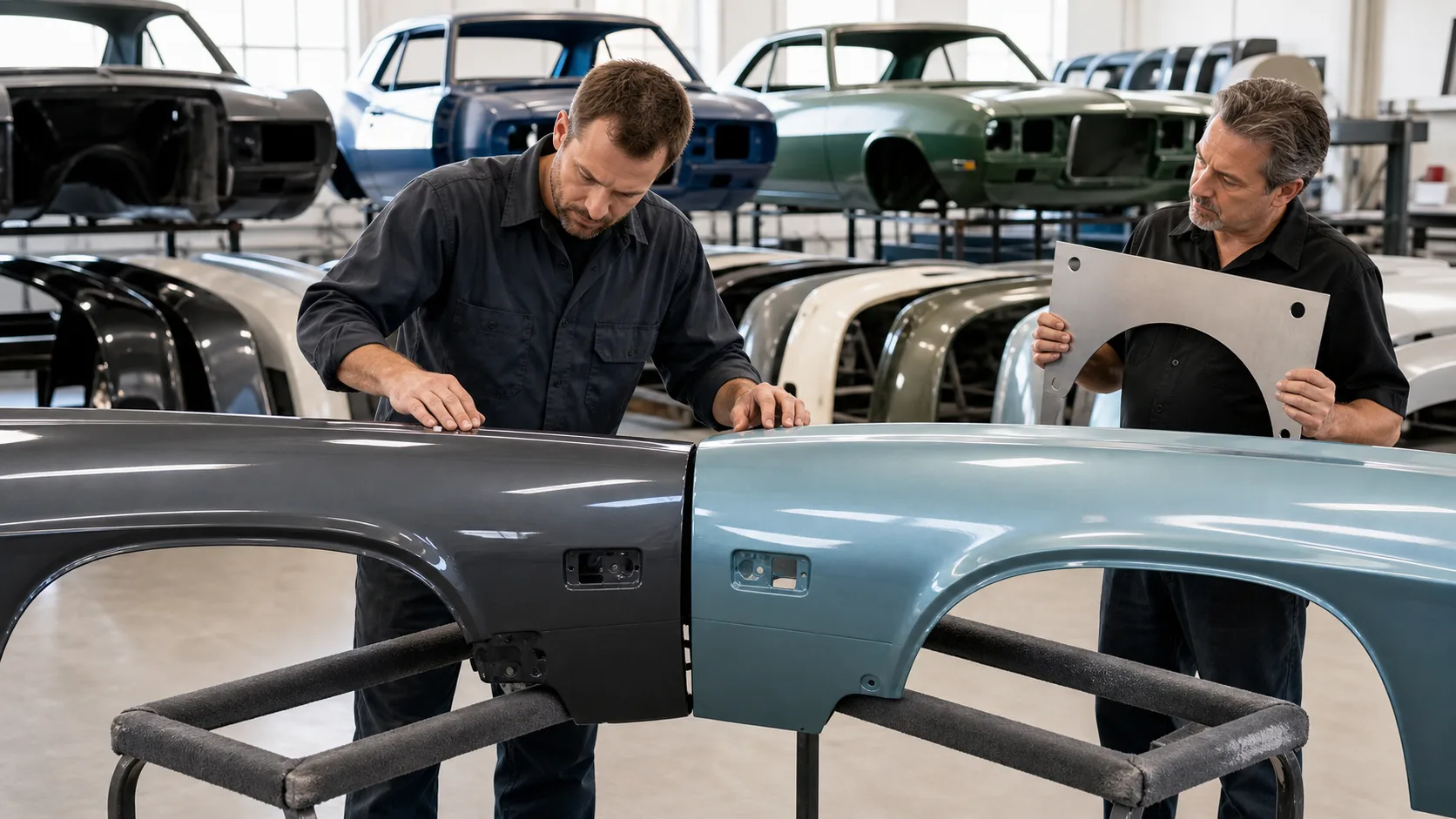
Experienced restorers have their own ways to avoid surprises when working with sheet metal. Most start by test fitting every major panel before welding or bodywork begins. They place parts on the car, align them with the surrounding pieces, and make sure mounting holes all fall where they should.
A few simple tools make the work easier.
- Tape measures
- Angle finders
- Contour gauges
These tools are often used to verify shape and slope. More experienced builders might reference factory brochures or digital templates to compare original body lines to the parts on hand.
We’ve found that panels made by Dynacorn typically match the original blueprints closely. These parts are stamped to meet factory specs per model year, which helps avoid the trimming or hole-drilling needed with lower-grade replacements. When the panel already matches bolt hole to bolt hole, a lot of time gets saved and the body sits straighter.
How Camaro Generations Differ in Metalwork and Mounting
Some of the biggest differences between Camaro years are hidden beneath the style. Structural attachment points, like front clips, hinge locations, and rocker panel shapes, can shift slightly even if the exterior looks nearly identical. That means if you’re building from bare metal, you need to compare more than just surface shape.
The trunk seam area is one place where the years can get tricky. On some generations, the tail panel meets the quarter panels with a welded seam tucked inward. On others, it’s exposed and assembled differently. That determines how replacement panels need to be shaped and installed.
Another thing that can trip people up is rocker panel shaping. On cars from the early 1970s, the rockers might flare differently than the year before, changing how the door shell sits flush. A mismatched panel in this area can leave a visible dip that stands out after paint.
Fenders and aprons can be hard too. If the mounting holes are off even a small amount, the bolts might pull the panel out of flat. That leaves high spots along the body or gaps near the lights and bumpers. Taking a few extra minutes to line up these details saves hours of sanding and filler work later.
Importance of Prepping in Early Fall for Restoration Work
October is one of the better times to dive into panel fitment if you’re mid-build. The weather stays fairly stable, and you’re less likely to battle humidity or heat while working with raw metal. That makes it easier to focus on accurate fitment before moving into primer and sealing work later in the season.
Here’s why early fall matters:
- Metal stays dry and flat in low-moisture conditions, avoiding flash rust.
- Consistent temperatures help panels hold their shape during welding or test fitting.
- You can use natural lighting to check seams and body gaps without shadows throwing your eyes off.
During this time, many builders work through the final panel alignment so they can head into the cooler months ready for mock-up or blocking. It’s a pace that keeps the project moving without having to rush under bad conditions.
Why Every Detail in Fitment Pays Off
Fitting Camaro body panels to the correct year has more impact than just looks. It builds a smoother base, reduces labor later, and helps the paint lay clean across the full shell. If two panels meet with natural precision, then less filler is needed, and surface prep becomes easier.
That’s why it matters to check every curve and connection before welding things down. Matching shape to shape builds a stronger structure and gives the finished car a tighter, more original look. We’ve learned over time that the more attention we give to body alignment early on, the better the outcome when the last coat of clear dries.
Getting the right fit for your classic rebuild can make all the difference, which is why we always recommend double-checking panel compatibility before starting any welding or mounting. One wrong bracket or crease can disrupt the entire alignment. Explore our high-quality Camaro body panels, including trusted options from Dynacorn, and contact Classic Body Parts today to get started on your next project.
Related Articles
Guide to Checking Door Panel Hardware on Classic Muscle Cars
Classic muscle cars deliver power, sound, and character. But behind the big engines and polished paint, it’s the small things like hardware that keep everyth…
What You Should Inspect in Truck Fenders Before Winter
Truck fenders take on a lot over the year. Rain, mud, road salt, loose gravel, heat cycles: all of it slowly wears them down. But when colder weather starts …
Steps to Install Full OER Sheet Metal Kits on Classic Builds
Restoring a classic car is a real investment in time and care. For many of us, the work isn’t just about bringing back something old, it’s about making it st…