


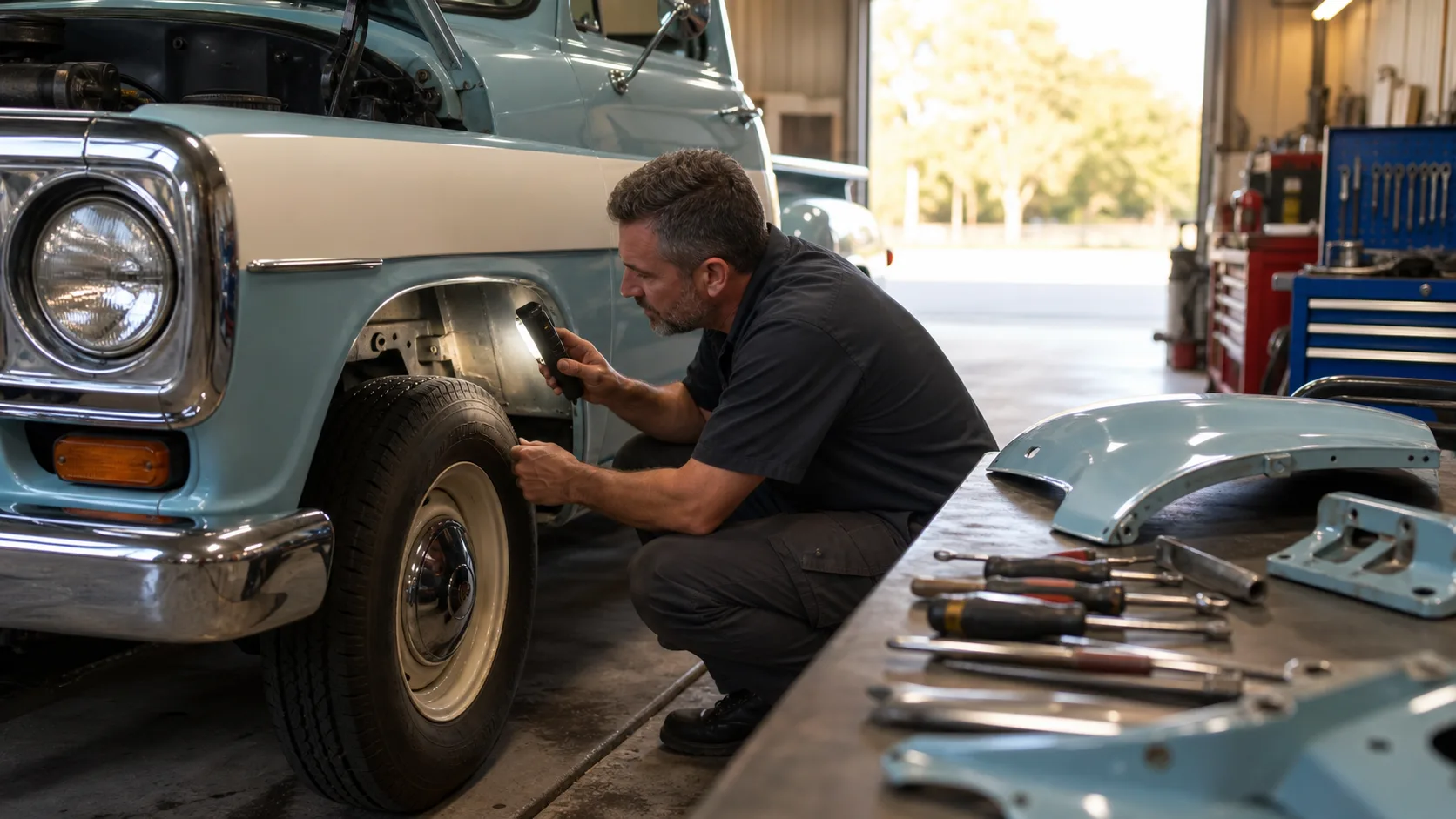
What You Should Inspect in Truck Fenders Before Winter
Posted on: October 8, 2026 in Restoration Guides
Truck fenders take on a lot over the year. Rain, mud, road salt, loose gravel, heat cycles: all of it slowly wears them down. But when colder weather starts creeping in, what’s underneath the surface rust or that uneven mount could become more of a problem.
Winter only adds stress with moisture, freezing temps, and more road debris. Whether you keep your truck on the road or tuck it away for the season, keeping the fenders solid makes a difference. Cracked seams or rusted lips don’t just look bad. They can let water in, cause damage beyond the panel, and throw off the alignment of any new parts you plan on adding come spring. If you’re already working with classic truck body parts this fall, now’s the sweet spot to slow down and check what’s going on behind the bolts and edges.
Check for Rust That Might Spread in Cold Months
Fender rust almost never starts off big. It hides in the seams, the curve of the wheel well, or under layers of old paint. Once cold sets in and road salt or water sits longer, small spots can easily spread into full panel issues.
Pay close attention when scoping for early rust. Look in the places it likes to hide:
- At the back edge of the wheel well
- Around lower facing corners and bolt holes
- Along the inside lip of the fender, especially where debris collects
Use your fingers to press along suspect edges. If it feels thin or flakes off, that’s a sign it’s gone soft. Take care of those early signs while the weather is still dry enough to allow clean prep and protection.
Inspect Gaps and Seams for Loose Fitment
Gaps between panels say more than you might think. A seam that looked fine in summer might look off now, especially if metal shifted over time. Loose fit around your fender edges means things have moved. That could be a bent tab, sag in a mounting bolt, or a bracket that’s lost some hold.
Focus on where your fenders meet the rest of the body. Look closely at:
- Edges where the fender lines up with the hood
- Gaps between the door and front panel
- Mounting points near the core support or lower structure
Wider or uneven lines let moisture work deeper into parts that were never built to take it. Tightening up those seams now is an easy way to keep the rest of the truck’s lines in check as winter storms roll in.
Look for Dents That Might Affect Panel Strength
Some dents don’t jump out at first glance. A soft ripple under the headlight or a small buckle near the trim can mess with the way your fender sits in the long run. Hidden bends are more than just cosmetic. They can stop liners from seating right or make new parts harder to install.
Once the temps drop, cold steel becomes brittle. If your fender is already weakened, it might not hold up well against thick sludge or a kicked-up rock from a salted road.
Walk around the truck from a few angles, especially when the sun creates shadows along the body. Look closely at:
- Fender arches, often stressed on older trucks
- Near trim or badges, where pressure may have built up
- Behind the bumper edge, where small impacts may have gone unnoticed
Get those dings sorted out before they create headaches or make spring work trickier.
Confirm Fender Attachment Points Are Solid
A good mounting point holds its shape and stays quiet, even over rough roads. But if your truck has been through repairs, or if parts were swapped without correct bracing, things may have shifted. You might notice it as a slight rattle at low speed or a vibration that shows up when hitting a pothole.
Take a minute to double-check where the fender meets the truck’s frame. Look at:
- Bottom brackets, especially where rust may have eaten into old bolts
- Welds near the top of the wheel well
- Firewall or cab mounts for cracks or weak spots
If any anchors feel loose or the metal flexes, that’ll only get worse under ice, slush, and cold contraction. Solid attachment means the fender can hold its shape and keep water out, no matter how harsh winter gets.
Assess Need for Fender Replacement Before Spring Work
Some fenders are too far gone. If you’re seeing large holes, patch-heavy spots, or bondo showing through, it might be time to replace them. Trying to save a panel that’s bending or bubbling out just leads to more time sanding, straightening, or correcting problems later.
Fall gives us a last clear window to swap in a better panel without fighting cold or damp. Dynacorn fenders are built to match the original form and tend to land square once mounted. Using a clean panel now sets you up stronger for any paint, trim, or hardware updates planned for the next season.
When you’re working with classic truck body parts and trying to keep the lines sharp and reliable, starting on solid fenders makes everything else easier.
Make Fall Inspections Count Before the Cold Rolls In
Fall doesn’t last long. It’s the last stretch to handle these bigger checks before freezes and moisture drag things out. Small rust spots, strange gaps, or a slow leak at a seam turn into bigger headaches by spring if ignored.
Cold air works its way into weak spots, and thaw cycles pull apart thin steel faster than you think. Taking time now to walk your truck’s body, press where it feels soft, and track what’s gone out of line helps preserve the shape and structure long term. Whether your project is parked or still in daily use, sharp panels and snug seams matter.
When fenders hold their shape, everything else stands a better chance of lasting through winter.
At Classic Body Parts, we know how important a solid foundation is for restoration projects, especially when working with classic truck body parts that need to stand up to tough weather. Our team works hard to keep inventory steady so you can start your project before winter. Keeping those fender lines clean now means easier adjustments in spring and better protection for what matters most underneath. Give us a call to talk through your next steps and see how we can help your truck stay strong for the long haul.
Related Articles
Guide to Checking Door Panel Hardware on Classic Muscle Cars
Classic muscle cars deliver power, sound, and character. But behind the big engines and polished paint, it’s the small things like hardware that keep everyth…
Understanding Camaro Body Panel Years for Accurate Matching
Matching Camaro body panels by year isn’t always as simple as it sounds. From the outside, many model years may look similar, but small shifts in body lines,…
Steps to Install Full OER Sheet Metal Kits on Classic Builds
Restoring a classic car is a real investment in time and care. For many of us, the work isn’t just about bringing back something old, it’s about making it st…