


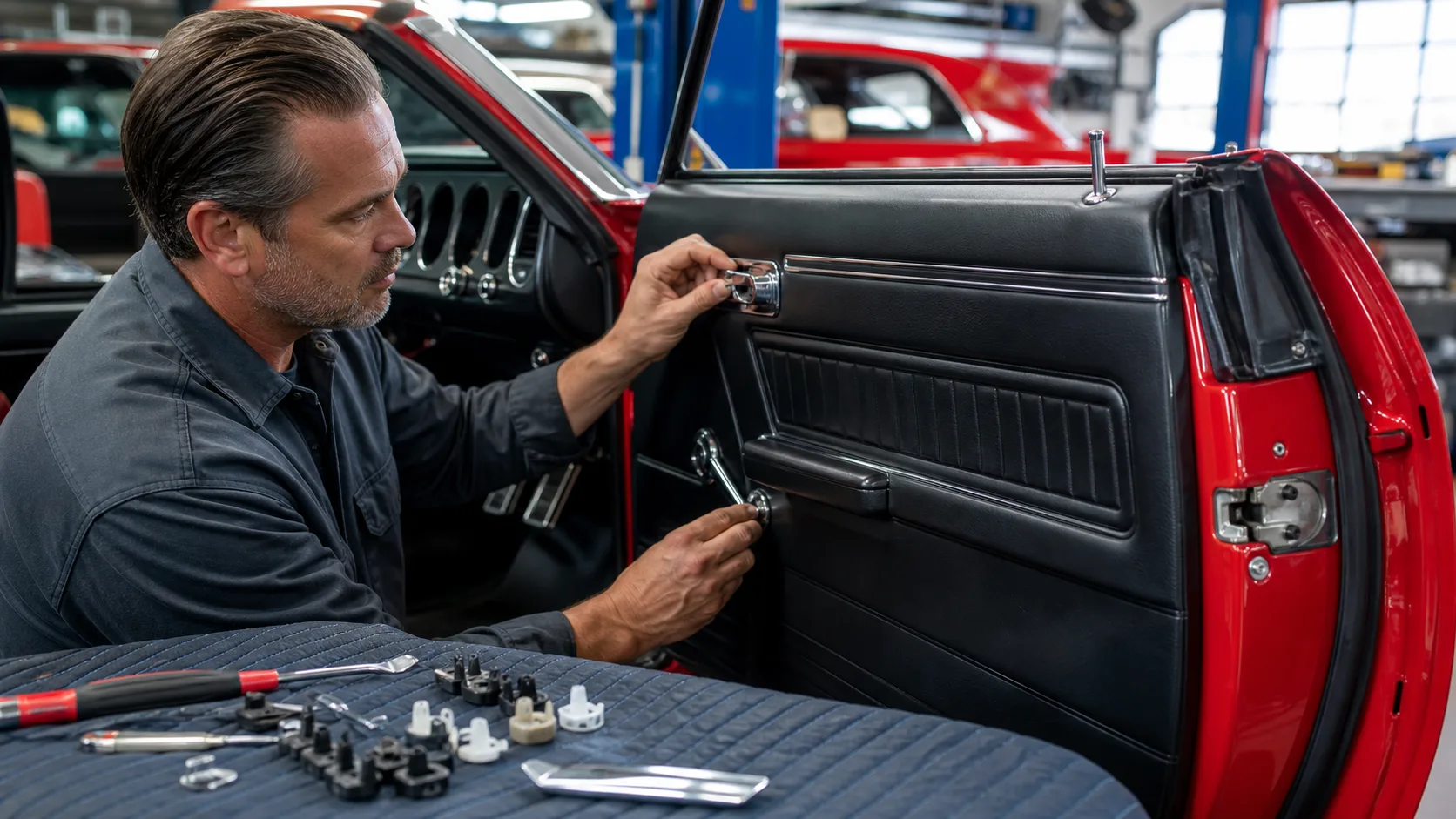
Guide to Checking Door Panel Hardware on Classic Muscle Cars
Posted on: October 15, 2026 in Restoration Guides
Classic muscle cars deliver power, sound, and character. But behind the big engines and polished paint, it’s the small things like hardware that keep everything working right. Those trim clips, screws, and brackets are easy to overlook, but if they’re loose or missing, panels can start to sag, rattle, or sit uneven. As we head into cooler months, it makes sense to slow down and check a few of these parts before wear gets worse.
One place many owners forget to look is the door. Classic car door panels take more stress than most realize, especially as temperatures change. That up-and-down shift can loosen mounts or weaken aging clips. A soft rattle or crooked edge might not seem like a big deal now, but it can lead to bigger alignment issues later. Checking your doors now can help you avoid headaches by spring.
What Makes Up Door Panel Hardware on Muscle Cars
Door panel hardware breaks down into more than just what holds the panel in place. It’s a mix of parts that help seal, support, and connect your interior panels to the rest of the door frame. If you’ve worked on older vehicles before, you’ve probably handled a few of these:
- Clips and retainers that snap the panel to the frame
- Screws tucked into edges or under trim
- Rubber grommets and plastic anchors
- Inner door handle linkages and fasteners
Over time, these parts shift. Seasonal expansion and contraction from heat and cold can mess with plastic clips or strip out worn screw holes. Even good parts lose shape after years of vibration. What might’ve felt tight last summer could be moving again now. A panel that doesn’t sit flush can rub against the trim or let moisture get behind it, slowly damaging both the door and the panel itself.
Knowing what holds those panels together helps make sure the repair or inspection isn’t just about tightening one screw. It’s about keeping the full door structure working the way it was meant to.
Signs That Your Classic Car Door Panels Need Attention
A classic car starts to tell you when something’s off. You just have to listen. When it comes to door panels, there are clear signs something’s slipped out of place. You might notice:
- Edges of the panel starting to pull away from the frame
- Rattling noises when the door closes or the car hits a bump
- Gaps or uneven spacing along the top or bottom line
- A snapping sound when you pull on the door handle
- A soft or dragging feel when you open or close the door
These signs often get worse as the months cool down. Parts that were loose in summer may go stiff or brittle when the weather shifts. A plastic clip that once held strong could suddenly break after one cold night. Even small shifts can change the angle your door closes at, which may affect window fit, lock alignment, or how well the door seals during winter storage.
Spotting these issues now gives you time to fix them before they spread into other parts of the car’s structure.
How to Inspect Door Panel Hardware Step by Step
Getting ahead of these wear points doesn’t take much. With a few minutes and some basic tools, you can get a clear read on the shape of your door panel hardware. We suggest this simple step-by-step check:
- Open the door wide to get a clear look at panel edges and attachment points
- Gently press along the surface to check for soft spots or flexing
- Look closely near screws or clips to see if the panel has shifted
- If safe to do so, pull the panel slightly to check tension at the retainers
- Peek behind the panel for cracked clips or missing fasteners, being careful to avoid damage to trim pieces
- Use a flashlight to look at linkage hardware for door handles and locks for looseness or rust
If it feels like something’s just barely holding on, it probably is. Fall is a good window to get this work done before cold air and moisture freeze parts in place or distort how they fit.
Don’t rush, especially if your car still has original finishes. Being gentle helps preserve those rare details.
When to Replace vs Repair Hardware
It can be tempting to just tighten what’s there. And sometimes, that’s enough. But knowing when to swap old hardware for new makes a difference in how well your classic car door panels hold up over time.
If you’re dealing with a missing or broken retainer, a single screw, or a cracking grommet, it’s usually simple to replace just that piece. But if the panel itself is warped, or the holes have been stripped or widened, the fix might need more than a quick fit. That’s all the more reason to look at things now, before colder weather makes adjustments harder.
We always recommend replacing hardware with parts that match the shape and fit of the originals. That makes reassembly cleaner and less likely to throw off alignment. Good replacement clips and fasteners help maintain the pressure needed to keep the panel flush, protect against rattles, and keep things sealed correctly while the car is stored or driven in cooler temps.
Fall is a good time to knock this out, since humidity is lower and temperatures are still mild enough to work without stress.
Better Function, Tighter Seal Before Cooler Weather Hits
Door panels don’t get as much attention as body panels or wheels, but they go through just as much action. Every tug on a handle, every close of the door, every bump in the road works those small parts just a bit more. Giving them a good look before cold weather settles in can save time later.
When the panels sit like they should, wind noise drops, moisture stays out, and the doors close smoother. Any sound that shouldn’t be there tends to fade away. Cold weather has a way of stressing tired parts. But going into winter with tight-fitting classic car door panels adds durability where it matters.
It’s a simple check, but an important one, especially if your car holds a lot of history. Taking care of what’s behind the trim helps protect the full shape and structure of what you’ve built.
Discover the difference quality restoration hardware can make when it comes to keeping your door panels secure and your project looking sharp through every season. At Classic Body Parts, we offer a wide range of hard-to-find components designed for lasting performance across many models. Explore our selection of classic car door panels to find the right fit for your build, and if you need assistance or have questions, our team is just a call away.
Related Articles
What You Should Inspect in Truck Fenders Before Winter
Truck fenders take on a lot over the year. Rain, mud, road salt, loose gravel, heat cycles: all of it slowly wears them down. But when colder weather starts …
Understanding Camaro Body Panel Years for Accurate Matching
Matching Camaro body panels by year isn’t always as simple as it sounds. From the outside, many model years may look similar, but small shifts in body lines,…
Steps to Install Full OER Sheet Metal Kits on Classic Builds
Restoring a classic car is a real investment in time and care. For many of us, the work isn’t just about bringing back something old, it’s about making it st…